






DrWheelchair, Singapore

Personal Mobility Aids in Singapore: An Honest Guide From the People Who Repair Them

If you are choosing a personal mobility aid in Singapore, whether a brand new one or a good second-hand one, this page lays out what you actually need to know. Our team has more than thirty years of combined experience repairing these machines, so what you read here comes from the workbench, not from a sales floor. Start with the part that matches your situation, then follow it into the page that covers it properly.

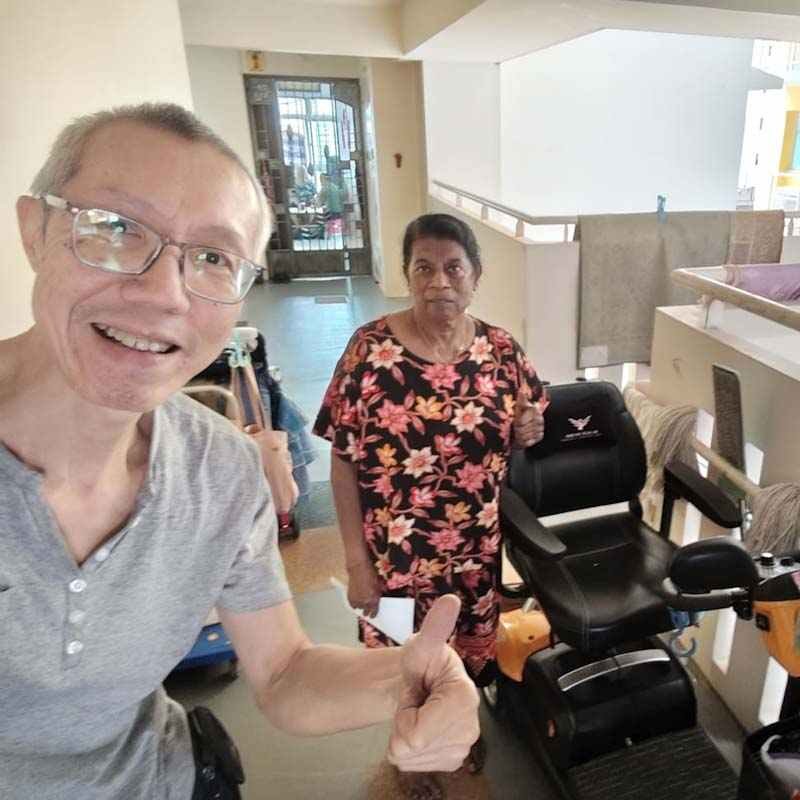
Ms Hajar with Kelvin
Ms Hajar
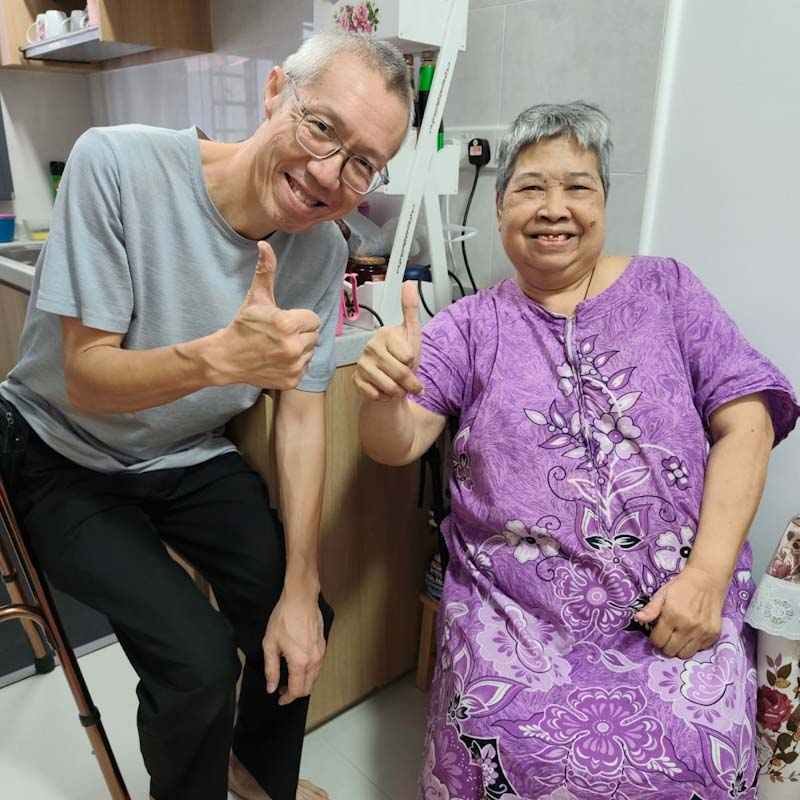
Ms Pauline Loo with Kelvin
Ms Pauline Loo
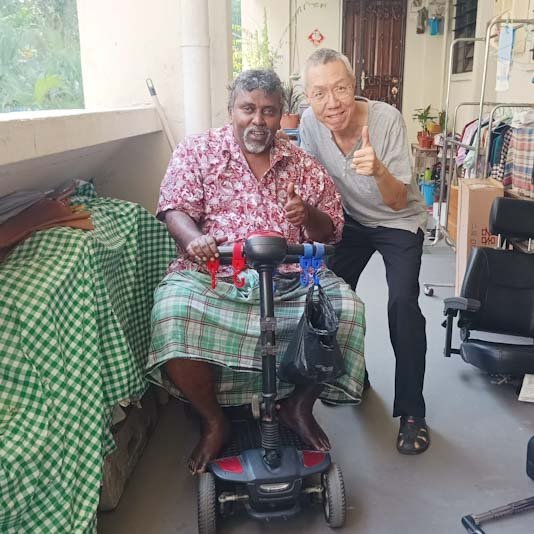
Mr Kumar with Kelvin
Mr Kumar
Mdm Saroja with Kelvin
Mdm Saroja
Mr Govind with Kelvin
Mr Govind
Mr Rajendra with Kelvin
Mr Rajendra
Kelvin with Ms Seri's Mum
Ms Seri S.
Mr Sum
Mr Sum
Mr Arjun with Kelvin
Mr Arjun
See all stories

What is a PMA, and PMA vs PMD (so you know what to buy)

What a PMA is

PMA is short for Personal Mobility Aid. It is a machine built for a person who can no longer walk far, or safely.

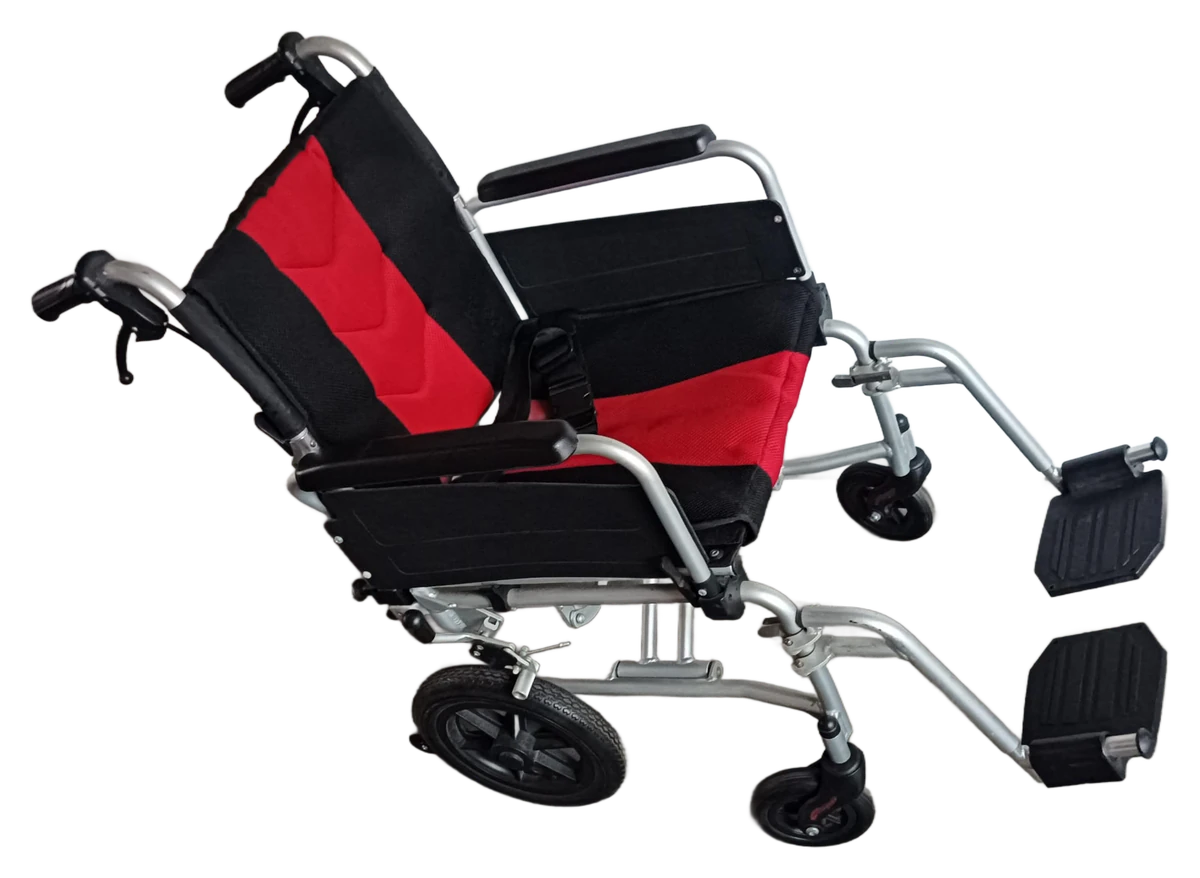
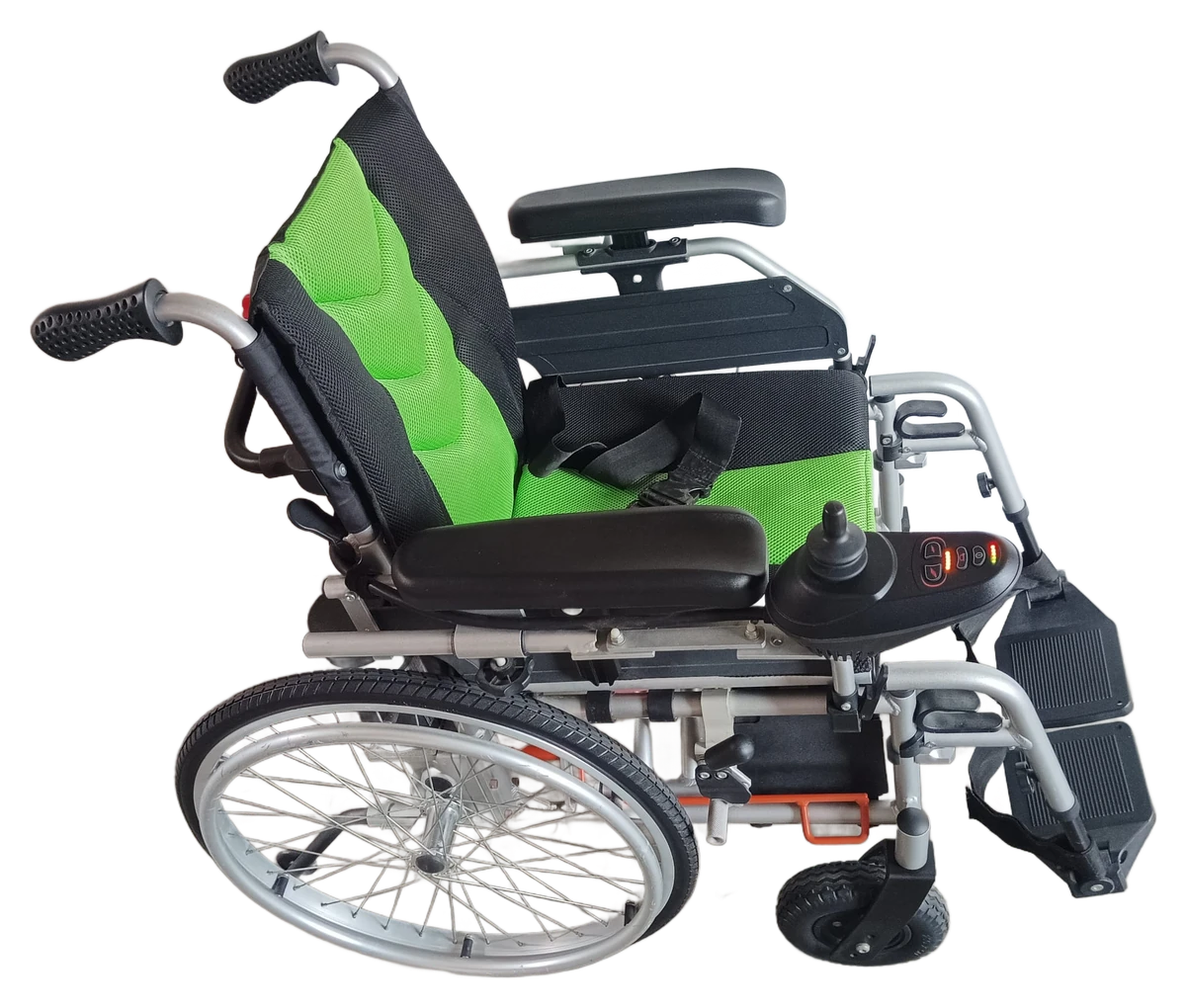
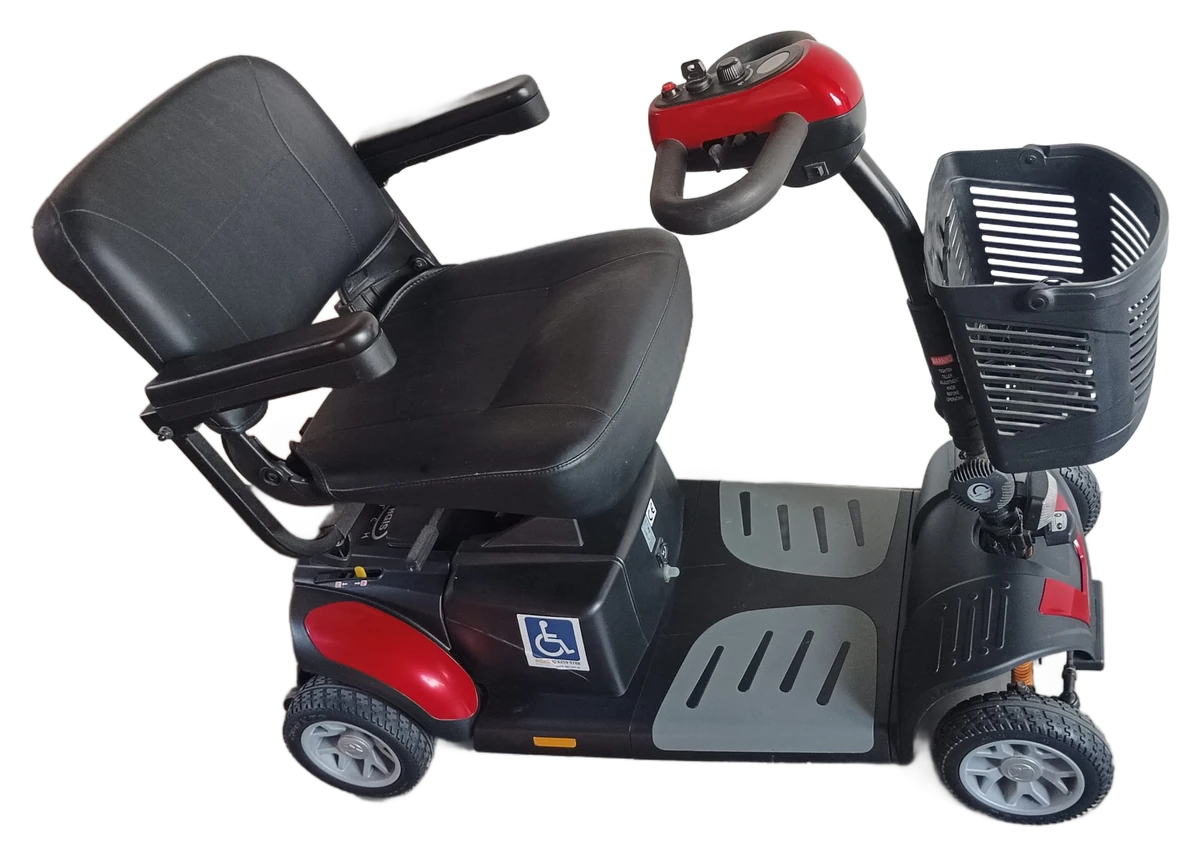
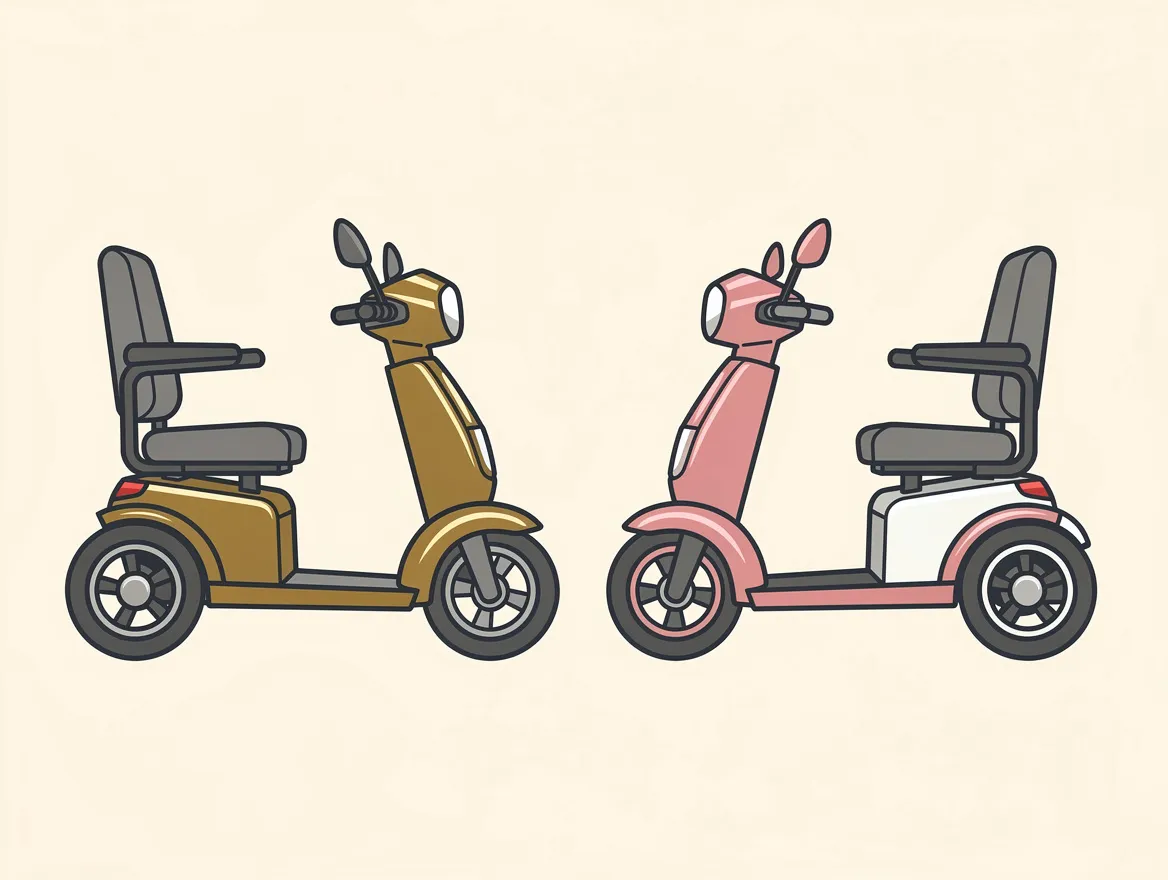
In Singapore the two you will meet most often are the motorised wheelchair and the mobility scooter. Some people search for a mobility scooter as a motorised scooter.

If you have been reading about personal mobility aids in Singapore and felt lost, that is all a PMA is. A way to keep getting about, and to keep your independence, when your legs need the help.

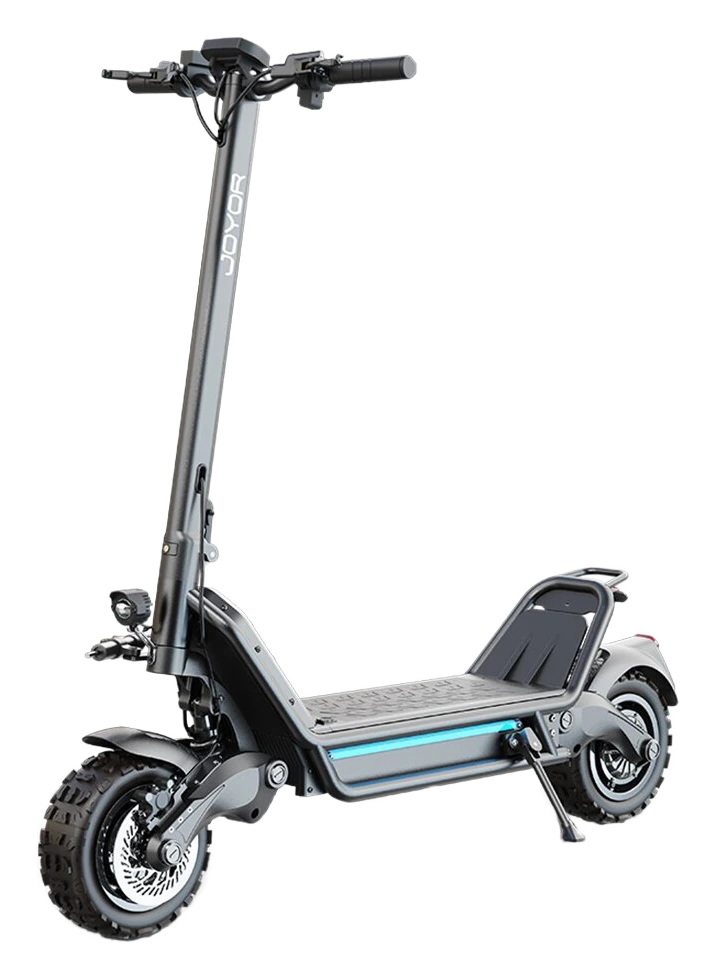
PMA against PMD

PMAPMD
Who it is built forSomeone with a genuine mobility needAn able bodied rider
The brakeA magnetic brake that holds by itself the moment you stop, with no lever to squeezeA hand lever on a bar, paired with a throttle
How you control itA joystick or a tiller, at walking paceA throttle, like an e-scooter
Why the difference mattersIt is treated as a mobility aid, and it is built for weak or one handed usersIt is treated as a transport device, with its own separate rules

The clearest tell is the brake. If the machine in front of you has a hand brake and a throttle, it is a PMD, not a PMA. That one check saves people a great deal of trouble, because the two are treated differently under the rules, and buying the wrong one is an expensive mistake to undo. DrWheelchair does not repair PMDs such as e-scooters and hoverboards.

Read the full PMA versus PMD guide
Do you really need a motorised PMA?

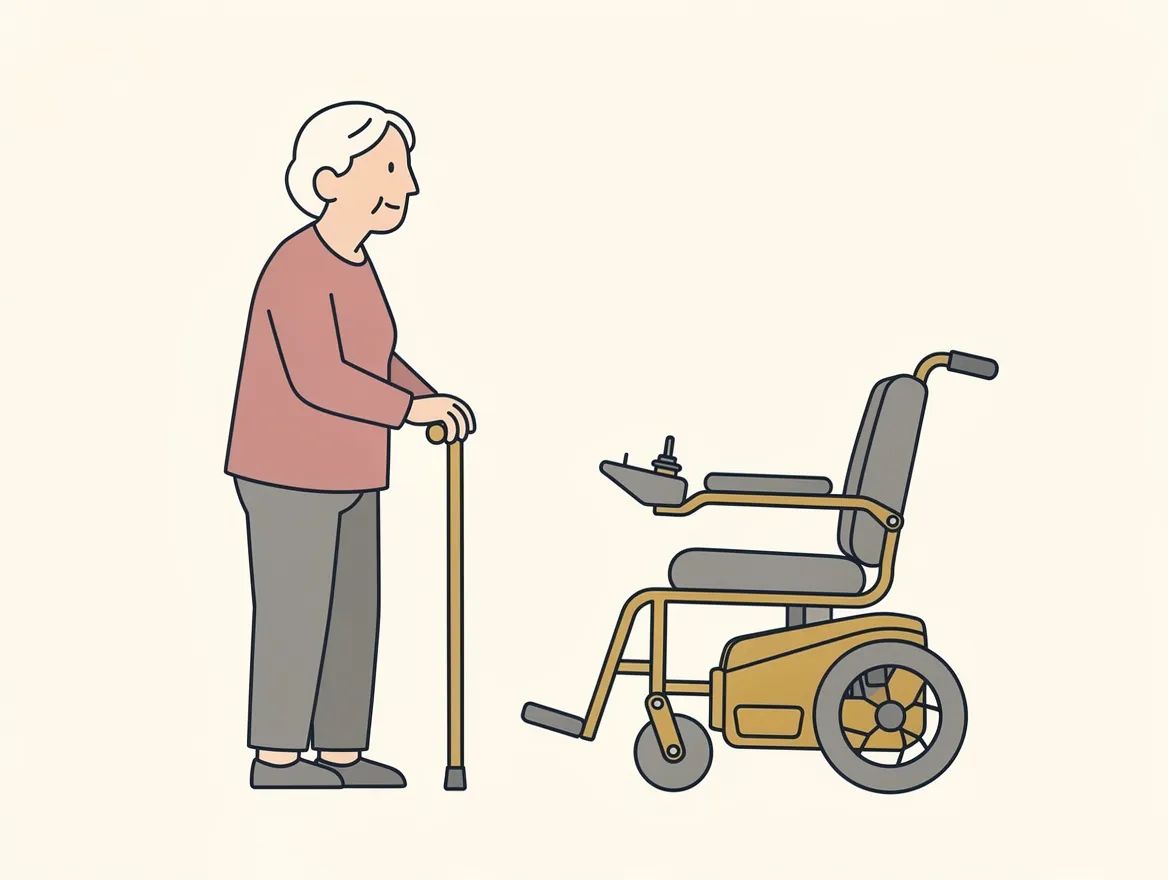
A drawing of a person with a walking stick beside a powered wheelchair

A guide to help you think it through

Before you spend on a motorised PMA, ask whether you truly need one. A simpler and cheaper aid may be enough.

If you can no longer get about on your own, and you have nobody to push you, a motorised PMA gives you back your independence. If a helper is with you most of the time and you are very weak, a manual wheelchair they push may serve you better and cost far less. And a motorised machine has a battery and a motor to look after, where a manual one has fewer parts to go wrong.

Eight questions worth sitting with

  • Can you still walk a short way safely?

    If you manage with a stick or a walking frame, a walking aid may be enough for now, and a motorised machine may be more than you need.

  • Do you need to get out on your own?

    If you want to go out without waiting for someone to push you, that points to a motorised PMA. If someone can push you and you are mostly at home, a manual wheelchair may serve better and cost less.

  • Is a helper with you most of the time?

    If a helper is nearly always there and you are very weak, a helper pushed manual wheelchair is often the better fit.

  • Can you sit upright without support?

    If you can, a mobility scooter can work. If you need real back or side support, that points towards a powered wheelchair.

  • Can you use your hands and arms to steer?

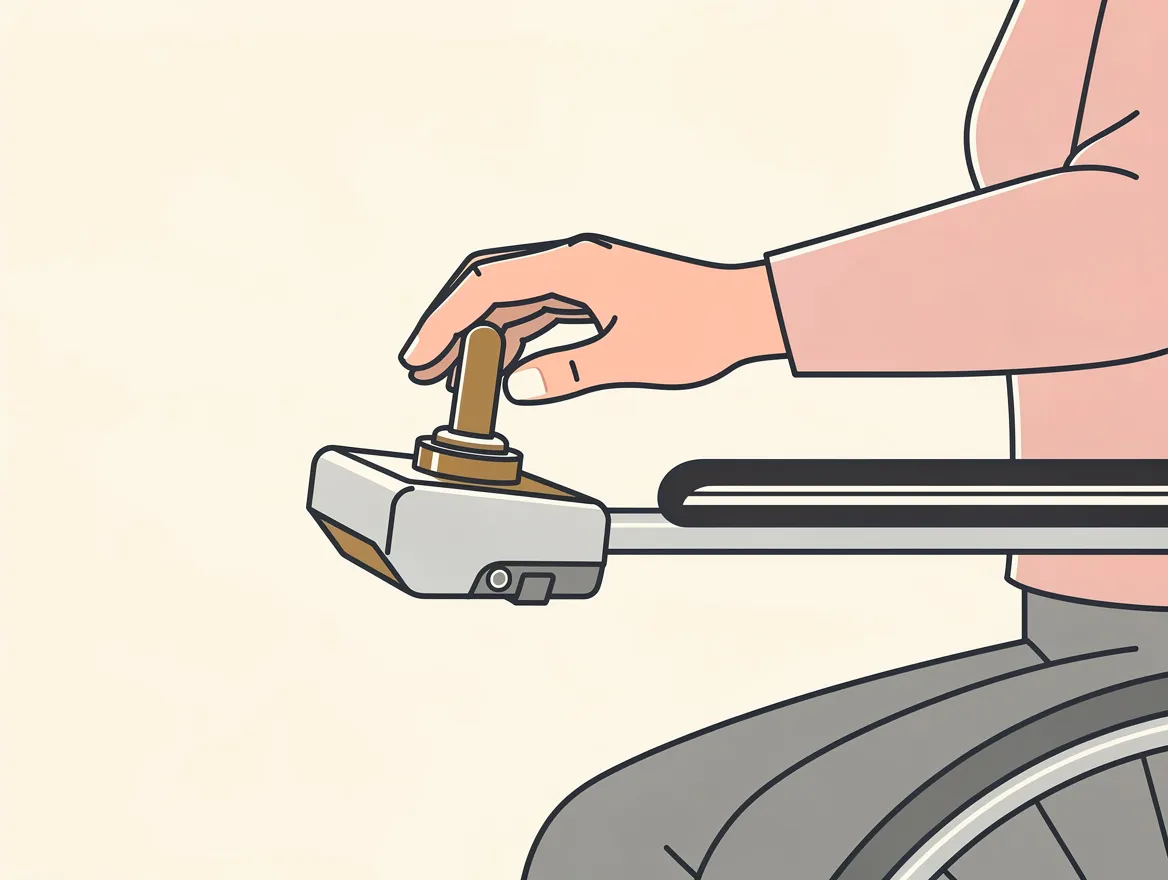
    A handlebar machine needs two hands and some arm strength. A joystick powered wheelchair can be driven with one hand and very little strength, which matters after a stroke.

  • Where will you mainly use it?

    Longer trips outdoors suit a mobility scooter. Tight turns indoors suit a powered wheelchair.

  • Will it fit your home and your transport?

    Check the doorways, the lift, the kerbs on your route, and whether it needs to fold into a car boot. There is a whole section on this further down.

  • What can you afford to run, not just to buy?

    A manual wheelchair costs less and has fewer parts to fail. A motorised PMA costs more, and it has a battery and a motor to look after.

If most of your answers point to getting about on your own, over real distances, a motorised PMA is likely worth it. The next question is which type, and each type has a page that goes into it properly.

Who a PMA suits: elderly, stroke and one-handed users, and buying for a parent who hasn't agreed

Why the brake is the whole point

A good PMA is designed around the people who use it, and that shows most clearly in one detail. The brake.

Because a PMA uses a magnetic brake, it holds the moment you stop, even on a slope, with nothing to squeeze and no lever to pull. That single design choice is what turns a machine into something a frail person can safely use on their own. These are adult mobility devices, built for the weight and the daily wear of a grown user, whether that is an elderly parent or a younger adult recovering from illness or injury.

  • For elderly users

    No lever to grip means no moment where tired hands have to hold a heavy machine on a slope. It brakes itself, every time, without being asked.

  • For stroke survivors

    A joystick can be worked with one hand, and the brake needs no hand at all, so a weak side does not decide whether you get to go out.

  • For anyone with one usable hand

    Everything that matters can be done one handed, which is rarely true of a machine built for an able bodied rider.

If you are buying for a parent who has not agreed yet

Many people reading this are not buying for themselves. You may be looking for an elderly parent who has not accepted that they need one, and who feels that a PMA means giving up. That is common, and it is worth going gently.

It usually helps to talk about what a PMA gives back rather than what it takes away. That includes the freedom to go to the market or the clinic without waiting to be pushed. It also helps if the advice comes from someone whose interest is not the sale.

Will it actually fit and hold up in a Singapore home?

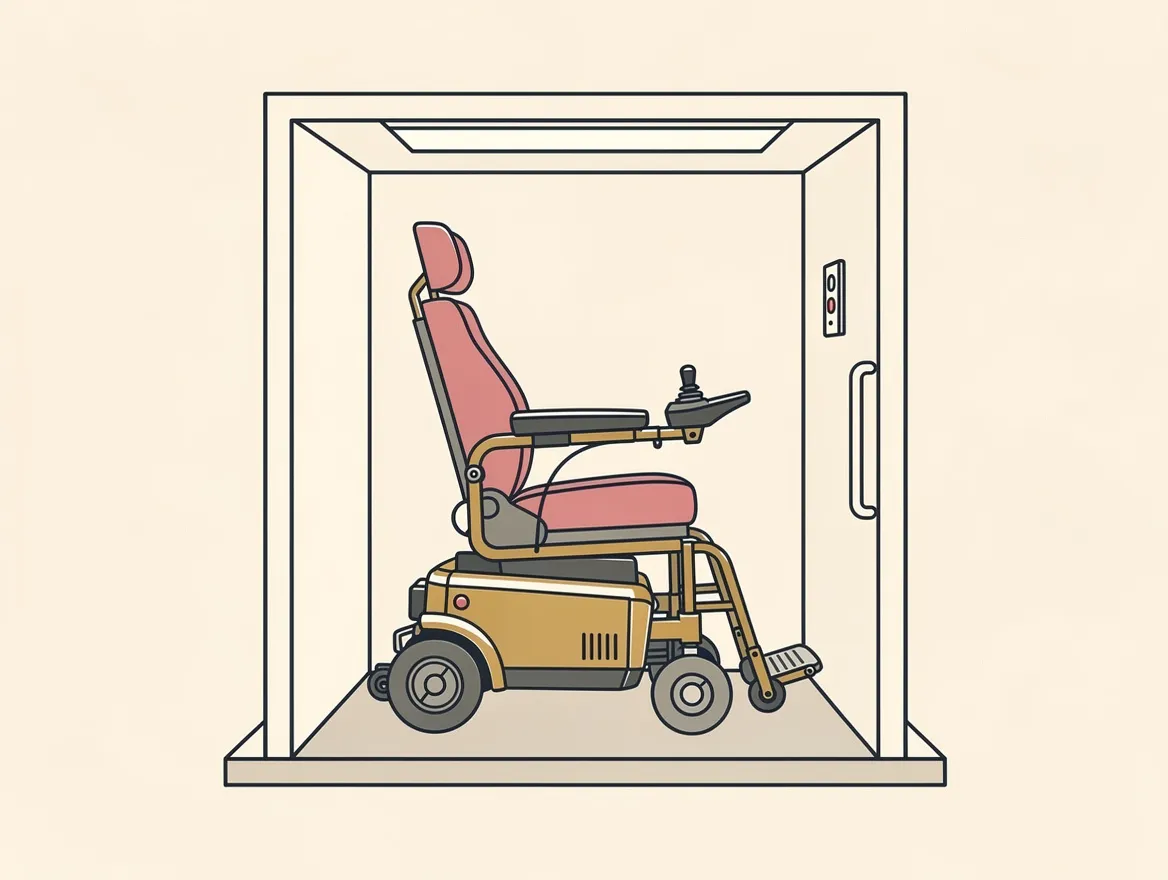
A drawing of a powered wheelchair inside a lift

A machine can be right and still be wrong for your flat

A PMA can be perfect in the showroom and still be wrong for your home. Singapore living has its own realities, and they are worth checking before you buy rather than after.

None of what follows is a fault in any particular machine. It is simply the built environment most of us live in, so the sensible thing is to measure your own situation against a model before you commit to it.

Five things to check in your own home

  • Will it fit the lift, and turn inside it?

    Lift doors and cabins here come in set sizes, and the real constraint is usually turning inside the cabin rather than getting through the door. A larger machine may not come round cleanly.

  • Will it clear your corridor and doorways?

    Common corridors are meant to keep about 1.2 metres clear for safety, but your own approach, gate and doorways can be tighter than that. Plants and other belongings kept along a shared corridor can also narrow the way through enough to obstruct a PMA, so measure the narrowest point on your way to the lift, not only your own doorway.

  • Can it handle the kerbs and ramps on your route?

    Kerb ramps are built to a gentle gradient, but not every kerb has one. Think about the actual path from your lift to the places you go.

  • Will the battery cope with our heat and humidity?

    Constant heat and damp are hard on batteries and on electronics. Storing and charging indoors, out of direct sun, is the manufacturers' own advice.

  • Where will you keep it and charge it?

    In a flat with no garage, storage and charging need a plan of their own, made before the machine arrives.

There is also a legal ceiling on how big one of these machines may be on public paths, which is a useful number to have in your head while you measure. We set it out with the rest of the rules.

Buying new vs second-hand: a fair, side-by-side comparison (and the five-year cost)

Both are sensible. Here is how to tell which one is yours.

Here is the heart of it. For most people a new PMA and a good second-hand PMA are both sensible choices, and neither is the right answer for everyone. What follows is the fair version, laid out side by side, so you can decide which one fits your situation.

New against second-hand

A new PMA

Pros

  • The latest model, with the newest features
  • A full manufacturer warranty from day one
  • No history to worry about, and the longest service life ahead of it
  • The simplest choice if you want the peace of mind of buying fresh

Cons

  • It is the most expensive way in
  • It loses value the moment it is used, the same as a car
  • You pay full price even if you will only need it for a season of life

A good second-hand PMA

Pros

  • A good deal less money for a machine that can still serve you for years
  • Usually available sooner
  • Sensible if the need may be temporary, or the budget is tight

Cons

  • Condition is everything, so where you buy it matters a great deal
  • A machine with no service history is a gamble
  • A private sale usually comes with no warranty and no returns

Look at the five-year cost, not the sticker price

Whichever way you lean, look past the sticker price. A PMA is not a one time buy.

Over its life it will want a battery or two, tyres, and regular servicing, and those running costs are much the same whether the machine started new or used. Batteries are usually the largest recurring cost, tyres a smaller one, and servicing depends on how hard you use it. We do not quote fixed figures here, because prices move and the honest number depends on your own machine and how you use it.

"Won't a second-hand one break?" The honest answer

The fear is fair. Here is the answer.

The honest worry about second-hand is simple. What if it breaks soon after I buy it? It is a fair question, and it is the reason many people pay more for new.

For our second-hand PMA checks, repairs and warranty terms, see the second-hand PMA page linked below.

Buying used from someone other than Kelvin: what to check first

If you are buying from a stranger

Not everyone will buy from us, and that is fine. If you are looking at a used PMA on an online marketplace, or from a private seller, here is what to check before you hand over any money, so that you buy with your eyes open.

Seven checks before you pay

  • Proof of ownership

    Ask to see the original proof of purchase, so you know the seller actually owns the machine.

  • Service and repair history

    A machine that has been looked after usually has some record of it. No history at all is a reason to ask more questions.

  • Battery age and health

    Batteries are the costliest part to replace, and a tired one can wipe out the whole saving. Ask how old it is, and whether it still holds a charge.

  • The metal and the tyres

    Look for corrosion around the battery terminals, worn or cracked tyres, and hidden rust under the seat and the frame. These are what a quick look in a car park misses.

  • A proper look before you pay

    If a seller will not let you inspect the machine in person, or will not switch it on and let you try it, treat that as a warning.

  • Warranty and returns

    A private sale usually comes with neither. Know that going in, and price it accordingly.

  • A price that is too good, with pressure to pay fast

    A great deal that has to be paid for right now, in cash, before somebody else takes it, is the oldest trick there is. Slow down.

We would rather you bought a safe machine, even one that is not ours, than a cheap one that lets you down. If you would rather start with a machine that has already been checked and refurbished, that is what our second-hand page is for.

Which brands we know

The brands we have had apart on the bench

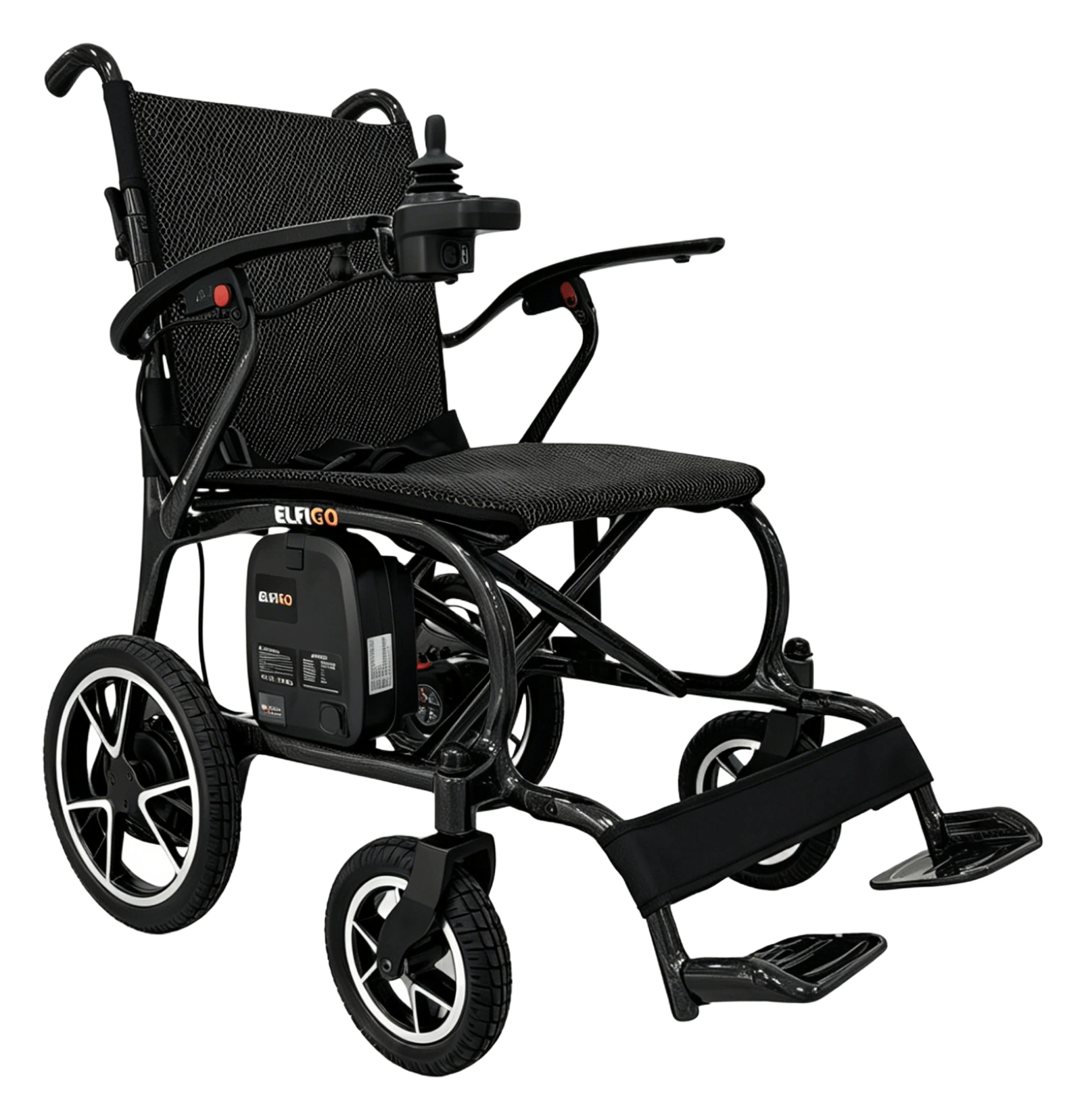
When someone has repaired mobility machines for as long as we have, they come to know certain brands inside out. The ones we know best, and have repaired for years, are from MOBOT, AGIS, DNR, ELFIGO (Previously known as Falcon), Rehab Mart.

  • MOBOT
  • AGIS
  • DNR
  • ELFIGO (Previously known as Falcon)
  • Rehab Mart

Folding and portable PMAs

If you need a machine that folds into a car boot, or that stores small in a flat, folding and foldable PMAs do exist in the Singapore market, both new and second-hand. A fold up model makes a real difference if you travel by car, or if space at home is tight.

We will not pretend that a particular foldable model is sitting in our stock today, because that changes. Tell us what you need to fold, lift or store, and we will tell you honestly what can be found or sourced.

LTA rules for using a PMA in Singapore

What the LTA rules say

Using a PMA in Singapore comes with rules from the Land Transport Authority, the LTA, and it is worth knowing the main ones before you buy, because they can change which machine makes sense for you. Last updated 15 September 2026, the day we last checked every rule below against the LTA's own pages.

What the rules say today

RuleWhat it says
Speed limit on footpaths6 km/h from 1 June 2026, lowered from 10 km/h. That is a walking pace, by design.
Certificate of Medical NeedRequired from 1 June 2026 for mobility scooter users on public paths, obtained through an assessment called the Assessment for Mobility Scooter.
Who is exempt from that certificateUsers of a motorised wheelchair, seniors aged 70 and above, and certain existing government scheme mobility scooter recipients.
Maximum size on public paths70 cm wide, 120 cm long and 150 cm tall.
Maximum weight with a rider on board300 kg.

These rules move from time to time, and there is more detail than fits here.

Government aid and grants for a PMA

Most people who qualify do not pay full price

Here is something many buyers do not realise. Singapore has government schemes that can cover a large share of what a PMA costs, for people who qualify, so it is worth checking before you decide a machine is out of reach. Which scheme is yours depends on who you are.

Which scheme is yours

Through the Agency for Integrated Care

The AIC scheme is generally for applicants aged 60 and above. It is means tested, and it can cover up to 90 percent of the cost of the device.

Through SG Enable

The SG Enable scheme is generally for younger applicants with a certified permanent disability. It is also means tested, and it can also cover up to 90 percent.

Four rules that decide what you get

  • Get assessed before you buy

    You must be assessed and approved first. There is no claiming the money back after the purchase.

  • It is means tested

    What you receive depends on household income, currently measured at S$4,800 or less per person per month.

  • One scheme per person

    Since February 2022 a person is served by one of the two schemes, not both.

  • Appointed suppliers only

    Subsidy money can only be spent through officially appointed suppliers and touchpoints.

Grant amounts and rules are set by the government and change from time to time, so check the official pages, or ask us, for the latest position.

Getting rid of a PMA you no longer need

One day you will need to part with it

A PMA does not last forever, and one day you or your family may need to part with one, whether it is worn out or simply no longer needed. In Singapore you cannot just leave it out, and it helps to know the proper way before that day comes.

What the rules are

  • It counts as e-waste

    A powered mobility machine and its battery are regulated electronic waste under the national Extended Producer Responsibility scheme, run by ALBA.

  • The battery never goes in a bin

    Not the normal rubbish bin, and not the blue recycling bin either.

  • Doorstep collection is free

    ALBA has run a free doorstep collection service since 1 January 2025.

  • Or your town council

    HDB town councils take bulky items free of charge, typically about three a month, though you move the item to the collection point yourself.

There is also more to say about donating a machine that still has life in it, so that it can help somebody else.

Read the options for donating or disposing of a PMA

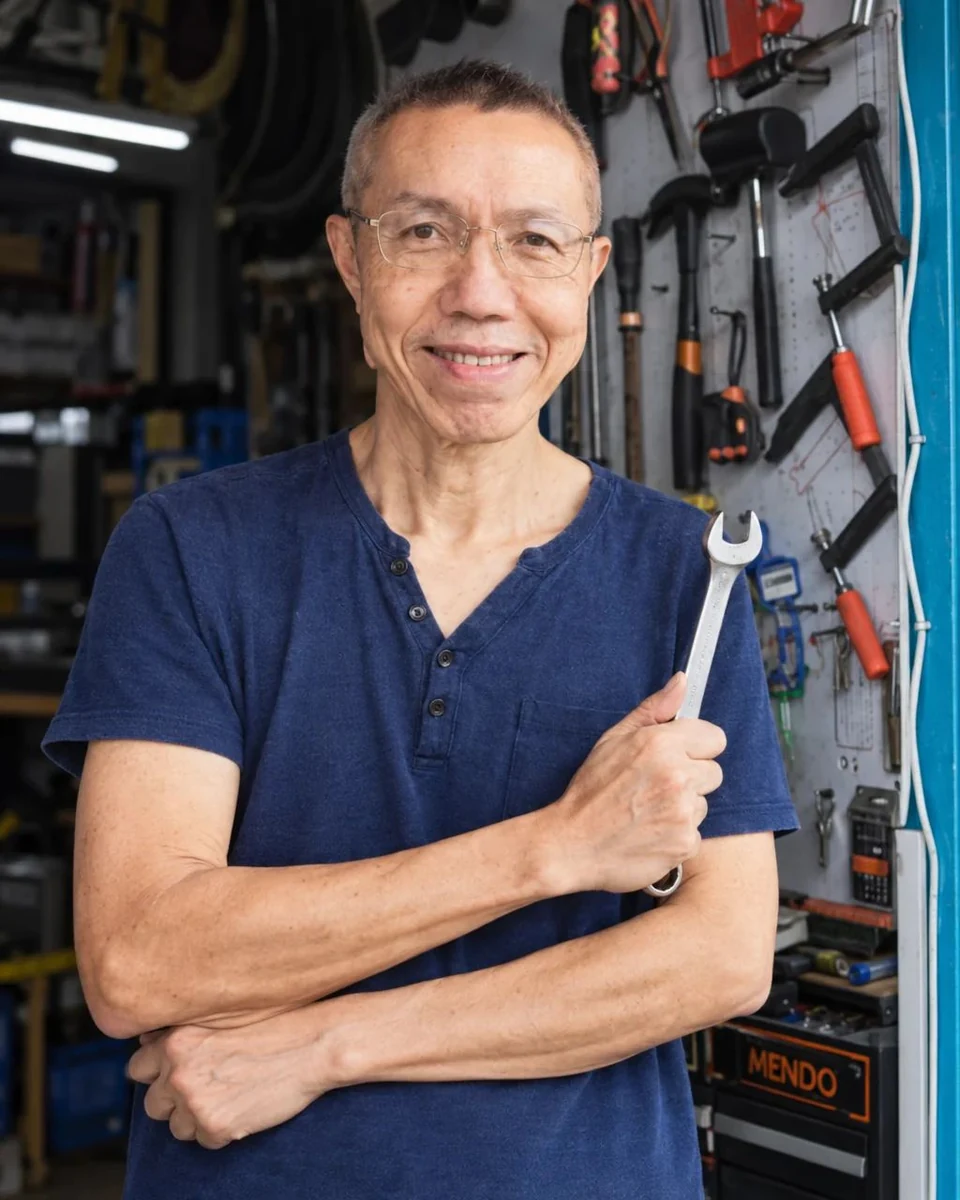
DrWheelchair Team

Kelvin with spanner

Kelvin

Founder, and the repairman behind DrWheelchair

The DrWheelchair team has spent more than 30 years repairing personal mobility aids. We see which machines break and which last, and our advice is not tied to selling you a particular machine.

To him this is not only a trade. He believes mobility is a human right, and that moving through your own day with dignity is not a luxury.

What happens after you buy

A PMA from us is not a one time sale and goodbye.

A mobility machine is something you lean on every day, and one day it will want attention. A battery, a tyre, a part that has worn. Because we repair these machines ourselves, we can fix what we sell, so you are not left with a machine and nobody to turn to.

Tell us your situation

Tell us your situation so we can give you honest, specific advice. We do not repair PMDs such as e-scooters and hoverboards.

Include in your WhatsApp message:

  1. Who the PMA is for
  2. What they can and cannot manage now
  3. What you hope it will help with
  4. Whether the device you already have brakes by itself, or has a hand brake and a throttle

If none of the pages above answers your situation, tell us about it. We read what you send, then come back to you with honest advice, whether that points to new, to second-hand, or to no motorised machine at all. There is no cart and no checkout anywhere on this site, and no obligation.

Where to go next

Each of these pages picks up a thread from above and takes it further.

Second-hand PMAs

The machines we have refurbished, how the process works, and the warranty terms.

PMA versus PMD

The full version of the difference, including where each one is allowed to go.

About DrWheelchair

Kelvin's story, and what mobility as a human right means to him.

LTA rules for PMAs

The current, full rules for using a PMA on public paths in Singapore.

Government aid and grants

Which scheme is yours, what it covers, and how to apply before you buy.

Donating or disposing of a PMA

How to give a machine a second life, and how to dispose of one properly.

Where to find us, and how to book a visit

Where to find us

Our workshop is in Tampines, and we are often out on service, so it is best to book an appointment before you come.

  • Address: 9002 Tampines Street 93, #04-66, Tampines Industrial Park A, Singapore 528836
  • Hours: 9am to 5pm, seven days a week
  • WhatsApp: 9636 1497
  • WhatsApp us on 9636 1497
WhatsApp Kelvin